
January 14, 2026
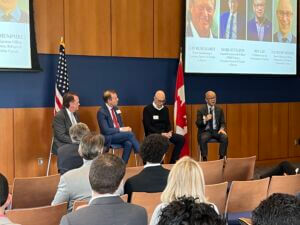
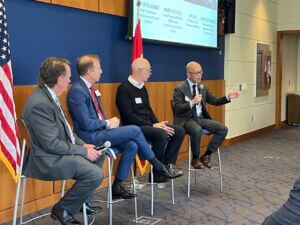
Episode 30: We had the pleasure of interviewing Bin Lau at a 2025 event at the Gatton College of Business and Economics. Bin Lau, representing the Canadian province of Alberta, emphasizes that the Canadian and U.S. economies are the most integrated in the world, with supply chains so deep that vehicles and agricultural products often cross the border numerous times during production. He highlights Alberta’s significant scale, noting that the province is equal in size to Texas and serves as a critical partner in North American energy security. Alberta currently provides 56% of all U.S. crude oil imports, a volume larger than the combined exports of Mexico, Saudi Arabia, and Iraq multiplied by two. This energy relationship directly impacts Kentucky, as Marathon refineries utilize Alberta crude to power the state's vehicles and tractors.
Beyond energy, Lau points to the cattle and beef industry as a primary example of economic integration, where livestock move freely across the border based on market and environmental needs. He asserts that Alberta’s oil reserves are the fourth largest globally and are managed within a transparent, ethical, and highly regulated jurisdiction. The trade partnership is mutually beneficial, as Alberta often sells crude at a discount, allowing U.S. refineries to triple its value through processing. Ultimately, Lau's mission is to raise awareness of these vital links to ensure continued collective prosperity and economic development.
Chapters
- Welcome and Guest Introduction
- Alberta and the Midwest: Strengthening Regional Ties
- The Energy Powerhouse: Fueling the American Economy
- Agriculture Without Borders: The Integrated Cattle Trade
- Kentucky’s Connection: Refineries and Shared Prosperity
- The Diplomatic Path: Bin Lau’s Journey to the Consulate
- Conclusion
Episode Transcript
Welcome and Guest Introduction
Jim Ray:
And friends, welcome back to the podcast. Today we're up at the UK Gatton School of Business and Friends. Welcome back to the podcast. Today we're up at UK. We're at the Gatton College of Business and Economics on campus here in the BE building and the World Trade Center and the Consulate General of Canada have put together a very large conference here. So we're very happy. We're expecting over 80 people today in attendance. And we've got a number of dignitaries who have come in from Canada and they're going to give us some more information about the state of Canadian and US trade relations and learn a lot really to be honest with you about what's going on in Canada. We had a nice dinner last night and got to meet the contingent who came down and learned a lot about just some of the things that are unique to Canada and some of the things, literally some of the factors are quite amazing. You don't really understand how much trade we actually do between Kentucky and the entire nation of Canada. With that being said, I would like to welcome to the podcast Bin Lau, who's with the Consulate General of Canada. This is specifically from the government of Alberta, which we'll talk about that in a little bit. And he's the director of the US Midwest. Bin, welcome.
Bin Lau:
Thank you, Jim. It's good to be with you.
Jim Ray:
Glad to talk to you. I had a great time talking to you last night and just learning a lot more about Alberta. So let's do this. Canada is made up of 10 provinces, which are similar to I guess our 50 states. I mean they're just much larger in mass. Talk to us a little bit about the provincial structure there and then let's focus in a little bit more on Alberta.
Alberta and the Midwest: Strengthening Regional Ties
Bin Lau:
Well, thanks Jim for the invitation to join you. I have the pleasure and honor of representing the Canadian Province of Alberta, as you say in the Midwest. We're part of a network of four offices in the us. We were the first to have an office in the Canadian Embassy in Washington 21 years ago. Wow. And we opened a series of regional offices a couple of years back. There's me in Chicago that looks after the Midwest. I've got colleagues in Seattle as well as Dallas. And we're here to promote Alberta trade with the US to get some attention on the importance of trade ties between our two jurisdictions, but also to carry our message, to promote our economic ties, our political ties, and generally raise awareness of Americans about the significance of Alberta links with the us.
Jim Ray:
And that's been absolutely amazing. For those of you who are not as familiar with Canada, it's a Western province. And again, just like in the United States, I mean our provinces, our areas are just demographically much, much different. I mean, you could throw a stone and you're going to see one community, you're going to turn around and throw a stone in a different direction and you'll see that. But when you get out to Alberta, I think last night you had mentioned it's much more of a cowboy orientation almost. I mean you guys are known for oil and beef in particular. Those are really big trading commodities for the both of us.
The Energy Powerhouse: Fueling the American Economy
Bin Lau:
We're very much a western Canadian province and very much proudly. So for your listeners context, we straddle along the Board of Montana shows how big Montana is. But to give some context, your audience about Alberta size, we are on par with Texas. We're about equal in area size. It's true, we have very much a western heritage about the province in the way it was settled where we just passed our 5 million in population. So, it's a substantial number. We do definitely punch above our weight economically. Yes, we are guilty happily so of being the prime energy exporting province of Canada. And in fact, we account for the majority of Canada's exports of oil to the us. In fact, Alberta alone accounts for 56% of America's crude imports.
Jim Ray:
Wow.
Bin Lau:
That is larger than Mexico, Saudi Arabia and Iraq combined, multiplied by a factor of two.
Jim Ray:
Unbelievable. So, if I took those three nations combined, their total imports or their exports are imports, doubled it. That's roughly about what we're already getting from Alberta.
Bin Lau:
Absolutely. And it's a relationship that's been there for a considerable time. We like to see that grow and it is very much a symbol of the partnership between Alberta in the US in terms of our united effort at energy security and partnership in North America.
Agriculture Without Borders: The Integrated Cattle Trade
Jim Ray:
Outstanding. Now the other topic that we touched on was beef, beef cattle, amazing. An amazing amount of cattle and beef that's shipped into the United States actually coming out of Alberta, I would imagine.
Bin Lau:
Absolutely. Just like energy is such a key part to the integration between Alberta's economy with the US agriculture is as well. And that's very much a dependent that's accounted by insignificant part by our cattle and beef industry. Significant example, Jim, of how integrated our economies are. Cattle might be born on one side of the border and let's say we're having a drought on one side of the border, one summer, we'll ship those cattle over to the other side. We don't ask for the passports across the border and they spend their summer there and then they might cross the border again to be brought to market in beef, in beef form. And as luck would have it, we are the largest cattle and beef producing province in all of the country. And so we have a tight relationship, especially with the northern states, just because it's much easier to bring those cattle back and forth across the border.
Jim Ray:
Unbelievable. I mean, just the sheer volume of trade that we're doing. I believe we had Colin Byrd, who's the Consulate General in a previous episode, more recent episode, and he was talking about the billions and billions of dollars that Canada does directly with the United, not just the United States, but actually Kentucky. And for us, it's astounding when we think we actually are engaged in that kind of international trade with Canada just out of the state of Kentucky, the Commonwealth of Kentucky. And to have you guys in here is just amazing. I mean, it's going to be a full day of presentations. You're going to speak today in about an hour or so. What is your topic today?
Bin Lau:
Well, it's a pleasure to be here, Jim, to join my Canadian Foreign Service colleagues here at the University of Kentucky. It's my second trip here and I'm really excited about it.
Jim Ray:
But it’s been your most enjoyable.
Bin Lau:
Absolutely. Especially, especially the sterling company at dinner last night. Look, I'm here to talk about very broadly, at a very high level how important our trade ties are with the US, at large as well as Kentucky. And maybe I'll set some context, tell you a story about how I usually engage with legislators when I do my travels to different state capitals. I open very broadly about the integration of the Canadian and US economies in a way that I don't think many people appreciate it. Certainly to me, the most integrated two economies in the world, everything from manufacturing, for example, my colleagues out east will tell you that a vehicle crosses the border 8, 9, 10, 12 times before it becomes a vehicle for sale in the showroom.
Jim Ray:
And that's due to the parts and the components that are being shipped across borders between the two of us.
Bin Lau:
Absolutely. The supply chain that exists between the two countries since the sixties, ever since the Auto Pact came to existence. Same goes to agriculture like I mentioned, whether it's cattle in Alberta in the us, whether it is hogs from Manitoba to Iowa for example, or canola. We send canola down to North Dakota. Its process, and then some of it is sent back to us. But of course, the key thing to Alberta's trade ties with the US is our energy, whether it's crude oil or natural gas. Did you know Jim, there are at least at last count, 60 to 70 oil pipelines crossing the border and around 30 gas pipelines across the border? And it's very much a relationship that is so vital to our collective prosperity, quality of life, economic development, employment as well, as well as keeping costs down. For example, we ship our crude down south through pipelines and rail primarily Alberta loan sells about a hundred billion dollars worth.
We sell it at a discount to you folks, and that in turn gets processed and converted into finished products worth three times the value. So you've basically tripled the value of that product, whether it is jet fuel, whether it's diesel, you name it, you guys have such a huge value added processing sector and you sell some of that back to us. So we have to pay full price for some of that product. And so that is a relationship that has worked. We see room to grow in that relationship, and we are selling right now about 4 million barrels a day to the US and we definitely have room to grow for that.
To give you some context further, Jim, we sell to all parts of the US but to the Midwest, for example, about three quarters of the oil that you use as feedstock that your refineries uses as input is from Alberta alone. And we want to keep that growing, not quite in Kentucky, but close to Kentucky as Ohio for example, there are four refineries that use Alberta crude. And so that relationship is very important.
Kentucky’s Connection: Refineries and Shared Prosperity
Bin Lau:
I know there are refineries in Kentucky, Marathon, for example. Marathon is one of the largest consumers of Albert accrued oil. So that crude is actually what is powering your vehicles, your buses, your tractors, your combines, and it very much, forgive the pun, fuels your state's economic development. And we see that as a mutually beneficial relationship. And we see that continuing. We have room to grow. And that is very much a desire on part of Alberta to deepen those ties with the us.
Jim Ray:
Well, and I think we touched on this briefly last night, was the fact that the refineries are set up for a certain type of input. So if we're bringing in Alberta crude, it's a certain recipe, I think you called it, a sour oil of some sort. And so to do the chemical processing and everything that has to happen to that product as an input, there's millions of dollars worth of investment in trying to make sure that the refinery is set up. So just simply switching to a different supplier is not really something you do in the short term and is not something that you do without a significant cost, I would think.
Bin Lau:
I would say it's billions of dollars in investment, Jim. You're right, the crude that comes from Alberta is primarily heavier sour crude that is set up to be accepted as feedstock by American refineries, a huge portion of them in the Midwest as well as the Rockies that does that get converted into the right blend of fuel that in turn is bought by your consumers retail wholesale that powers the American economy. And that appetite continues to grow in the us.
Jim Ray:
And I would think just from an environmental impact standpoint, it's a lot easier to ship it down on rail or via pipeline than it would be to pay a large super tanker to bring it all the way across the ocean from somewhere else that's producing at a different regulatory environment so that maybe it's not being done as environmentally conscious as it would be between Canada and what we're doing here in the United States. So, it just seems like that's the better solution.
Bin Lau:
Not only are you importing your feedstock from what we think is your best friend in the world, your best ally, your neighbor, we've gone to conflict together. We've done a lot together as two countries in a partnership that is, I would argue second to none, but that crude Jim is the most ethically explored, cleanest. It's also Dun and jurisdiction that is totally transparent. And we have the fourth largest proven well reserves in the world. Well, we would say arguably that it's probably the world's largest investible and transparent reserves in the world. Outstanding, outstanding.
The Diplomatic Path: Bin Lau’s Journey to the Consulate
Jim Ray:
So let me do this as we begin to wrap up now. Tell us a little bit about your journey. How did you get into the role in working now with the constant general of Canada? How did that come about? What did your background, I guess, and how did you do this? And more importantly, we've talked a lot about your role, but what's a typical day in Bin's life?
Bin Lau:
Well, if you take this month as an example, the first week of September I was in Washington DC helping our folks run our US network of offices. While the magic director was on vacation. Last week I was in Arkansas attending the annual meeting of the National State Departments of Agriculture. And so got to meet quite a few people there along with the rest of Team Canada. This week I have the honor of being here representing Alberta, talking to you in a short time, talking at the business event that's organized by the University of Kentucky Business School. So that's what my typical month has been. There are months where I travel less, but given current events, you can understand why that I'm on the road a lot. My path here has been unconventional. I've spent most of my life in corporate communications, then spent eight years as a political staffer and the forces that be brought me here.
And I've been in the states for coming up to two and a half years now in a country that I've always had a lot of reverence for. I did my graduate studies in upstate New York and you actually went to Cornell if I recall, guilty as charged. I don't advertise that greatly, but I did. And I really miss New York and I would love to go back there one day and just check things out. It's been a while, but I've enjoyed my time in Chicago. I wish I was a little more often to actually get more out of it. And I'm looking forward to this fall, maybe slow slowing down a bit and taking time to chill there. But this has been an amazing adventure and coming to Kentucky has been definitely the highlight of September.
Conclusion
Jim Ray:
Well, I tell you what, I do appreciate your presence here. It's been good getting to know you. We had a great conversation yesterday and then I know you'll have a fantastic presentation here actually shortly. So why don't we go ahead and wrap up for today and I'll make sure you get back to the room so you can prepare your notes for the upcoming presentation. Bin Lau, it's been a pleasure getting to know. It’s been a pleasure getting to speak with you today. And I really want to thank you for your time coming down to the United States, coming down to Kentucky, but also sitting here for the World Trade Center's podcast.
Friends, I hope you found that interesting. It's an amazing topic. Obviously, it's a topic that's in the news a lot right now, but I think for a lot of us here in the States, we don't fully appreciate the value of the relationship and the friendship between the United States and Canada. And for a lot of us here in Kentucky, what's becoming more and more evident to us if you're listening to this podcast is Kentucky's ties invaluable relationships with Canada. And so I hope that continues and I hope through this dialogue things tend to settle down and we get about doing some more commerce. I think that's good for both of us.
So, from all of us here at the World Trade Center, Kentucky's this Global Trade Adventure Podcast. Thanks for listening. And when you're ready to engage in international business, we're connecting businesses globally.
To Learn More:
Website: www.alberta.ca/international-offices-united-states
Upcoming WTCKY EVENTS:
- 01/29/26 – Solving Hard Problems with AI
- 02/03/26 – Global Executive Forum: Expanding Kentucky’s Reach in the UAE Market
- 02/10/26 – Kentucky Industry Legislative Reception
- 04/14/26 – 04/16/26 – International Trade Certification
- 10/12/26 - 10/21/26 – Discover Beautiful Ireland with WTCKY
The next episode of our podcast will launch on 01/27/25. Thank you for listening. Be sure to follow This Global Trade Adventure on your favorite podcast platform, or at www.WTCKY.com/podcast.
We hope you enjoyed this episode. Our schedule is to publish a new episode on the 2nd Monday of each month.
Please consider sharing this with your colleagues. Until next time, thank you for listening and welcome to This Global Trade Adventure.